



Quote Cart
Add products for bulk inquiry. We'll respond within 12 hours.
Your quote cart is empty.

A portable tire inflator is a practical automotive accessory for maintaining tire pressure at home, on the road, or during roadside emergencies. However, not every portable inflator is designed for the same vehicle type, usage frequency, or application.
For automotive distributors, wholesalers, fleet suppliers, and private-label brands, choosing a tire inflator is not simply about finding the highest PSI rating. Power source, inflation performance, pressure control, portability, battery capacity, operating time, durability, and available functions all affect how the product performs in real vehicle applications.
This guide explains what to look for when choosing a portable tire inflator and what B2B buyers should evaluate before placing a bulk order.
A portable tire inflator is a compact electric air pump designed to add air to vehicle tires without requiring a fixed air compressor.
Compared with workshop air compressors, portable tire inflators are designed around mobility and convenience. They can be stored in a vehicle and used when tire pressure is low, during routine maintenance, or as part of a roadside emergency kit.
Depending on the design, portable tire inflators may use:
For automotive accessory suppliers, the right power configuration depends on the target vehicle market and intended application.
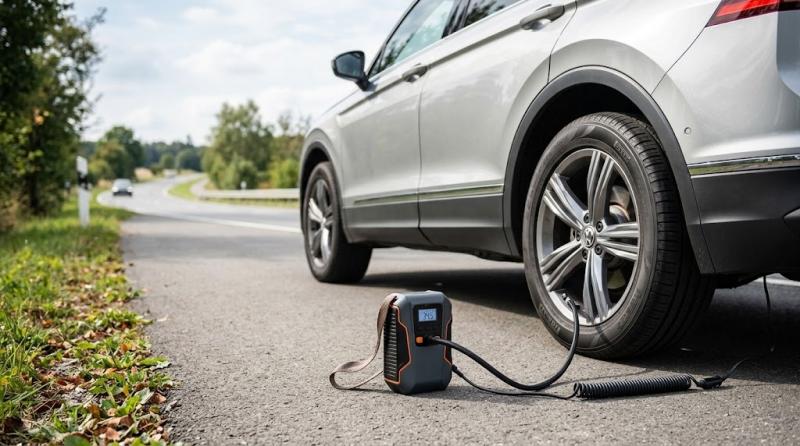
When selecting a portable tire inflator, buyers should evaluate more than maximum pressure.
| Factor | What to Check | Why It Matters |
|---|---|---|
| Power Source | Rechargeable battery, 12V, or dual power | Determines where and how the inflator can be used |
| Inflation Performance | Airflow, inflation time and operating cycle | Affects how quickly tires can be inflated |
| Maximum Pressure | Published PSI rating | Determines the pressure range the product can reach |
| Pressure Control | Digital gauge, presets, auto shut-off | Helps improve ease of use and pressure control |
| Battery Capacity | Battery voltage and capacity | Affects cordless operating time |
| Portability | Size, weight and storage | Important for in-vehicle storage |
| Hose and Cable | Length, flexibility and connection | Determines reach and convenience |
| Durability | Housing, motor and heat management | Important for repeated vehicle use |
| Extra Functions | LED light, power bank, accessories | Can increase product versatility |
| Customization | Logo, color, packaging and functions | Important for private-label programs |
The correct combination depends on whether the product is intended for passenger cars, SUVs, motorcycles, roadside emergency kits, fleet maintenance, or general automotive accessories.
Before selecting an inflator, determine which tires the product is expected to service.
A compact inflator designed for passenger vehicles may not be the right choice for larger tires or more demanding applications.
B2B buyers should consider:
The vehicle's recommended tire pressure should be checked before selecting the inflator. The pressure requirement is normally provided by the vehicle manufacturer rather than determined by the inflator itself.
For product development, this means the inflator should be matched to the intended vehicle category rather than marketed simply by its maximum PSI number.
A high maximum PSI rating does not automatically mean that an inflator will inflate a tire quickly.
Inflation performance also depends on factors such as:
For this reason, B2B buyers should request realistic inflation performance data instead of evaluating a product only from the largest PSI number printed on the packaging.
Power source is one of the most important differences between portable tire inflator designs.
Rechargeable models use a built-in battery and do not need to remain connected to the vehicle while operating.
Advantages include:
The main consideration is battery readiness. A cordless inflator stored in a vehicle should be maintained according to the manufacturer's charging recommendations.
A 12V model uses the vehicle's electrical system.
Its main advantages include:
The trade-off is that the user needs access to the vehicle's 12V power connection, and cable length becomes an important consideration.
Some automotive inflators combine rechargeable battery operation with vehicle power.
This can provide additional flexibility for automotive emergency products because the user can select the power source according to the situation.
For B2B buyers, dual-power designs can also create more positioning options across different automotive accessory channels.
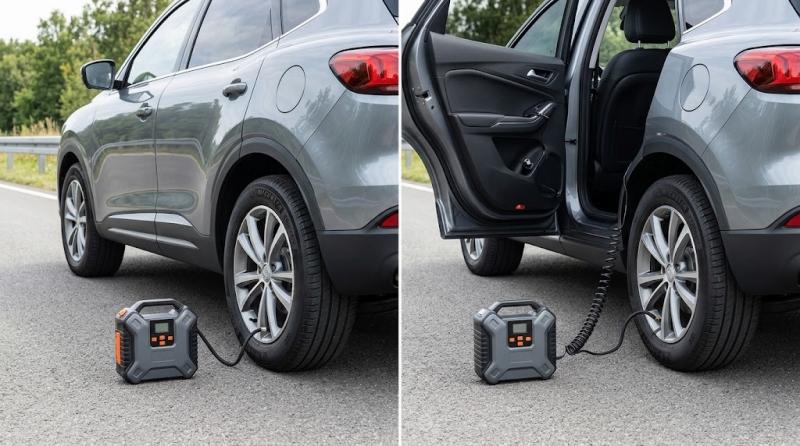
Inflation speed is one of the most practical specifications for a tire inflator.
However, published inflation time should always be considered together with the test conditions.
When comparing suppliers, ask:
This information is more useful than comparing isolated claims such as "fast inflation" or "high power."
For product listings and B2B catalogs, suppliers should provide a clearly defined test condition whenever inflation time is used as a selling point.
Pressure control directly affects usability.
A portable tire inflator with a digital pressure display allows the user to monitor the current pressure and set a target value on compatible models.
An auto shut-off function can stop inflation when the preset pressure is reached.
This combination is particularly useful for:
For B2B procurement, buyers should verify how the pressure display works and whether the displayed pressure is consistent with the product's specified measurement range.
Portability is one of the main reasons consumers and automotive accessory buyers choose a portable tire inflator instead of a larger compressor.
The product should be easy to store in locations such as:
However, making the product smaller can also limit motor size, battery capacity, heat dissipation, or inflation performance.
This creates an important product-development balance:
Compact enough to carry, but capable enough for the intended tire application.
For B2B buyers, the external dimensions and packaging dimensions should both be considered because they affect retail packaging, storage, shipping, and warehouse efficiency.
A portable inflator needs to reach the tire valve comfortably.
Important details include:
A hose that is too short can make operation inconvenient, especially on larger vehicles.
For 12V models, cable length is equally important because the inflator needs to reach all four wheels from the vehicle's power connection.
The connection system should also be tested for ease of installation and reliable sealing during inflation.
For rechargeable models, battery specifications are important, but battery capacity should not be evaluated separately from motor performance.
B2B buyers should check:
A larger battery may increase operating time, but it can also increase the product's size and weight.
For a compact automotive emergency inflator, the goal is not necessarily to maximize battery capacity. Instead, the battery should provide a reasonable balance between runtime, size, weight and inflation performance.
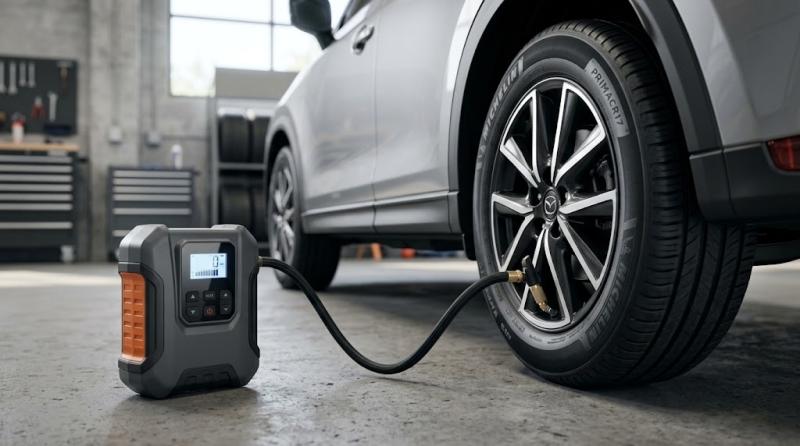
Portable tire inflators are increasingly designed as multifunctional automotive accessories.
Depending on the product configuration, additional functions may include:
A built-in light can be particularly useful when checking tire pressure or connecting the inflator at night.
For automotive brands, multifunctional products can also be positioned as part of a broader roadside emergency solution rather than as a standalone air pump.
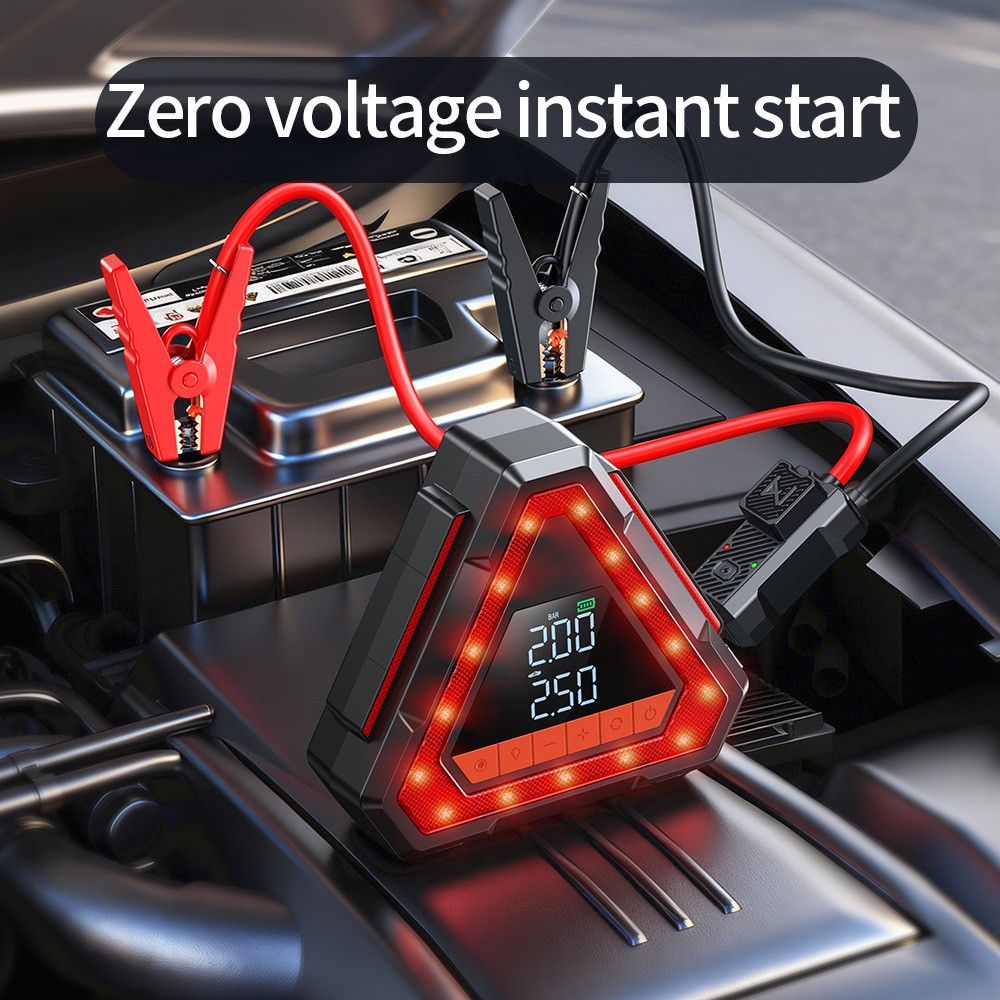
Forcar's automotive accessory product range can also connect the tire inflator with other roadside functions.
For example, a multifunctional emergency device may combine:
This type of product can be suitable for:
The product configuration should still be selected according to the target market rather than adding functions simply to increase the specification list.
For automotive distributors and automotive accessory wholesalers, product comparison should include both technical performance and commercial factors.
| B2B Evaluation Factor | Questions to Ask the Supplier |
|---|---|
| Vehicle Application | Which vehicle and tire types is it designed for? |
| Power | Battery, 12V, or dual power? |
| Inflation Performance | What are the actual test conditions? |
| Pressure Range | What is the working and maximum pressure range? |
| Battery | What battery type, voltage and capacity are used? |
| Charging | What connector and charging time are required? |
| Display | Is there a digital pressure display? |
| Auto Shut-Off | Is automatic pressure control available? |
| Durability | How has the product been tested for repeated use? |
| Accessories | What hoses, nozzles and cables are included? |
| Packaging | What retail and bulk packaging options are available? |
| Customization | Are logo, color, packaging and functions customizable? |
| MOQ | What is the standard MOQ for OEM orders? |
| Lead Time | What is the standard production lead time? |
| Quality Control | What inspection process is used before shipment? |
This approach helps buyers compare suppliers based on the complete product program rather than a single specification.
For automotive distributors and private-label brands, sample testing should be completed before mass production.
A practical evaluation can include:
Testing the sample before mass production can help identify issues before they affect a larger shipment.
For automotive accessory brands, the product itself is only one part of the purchasing decision.
A suitable OEM tire inflator program may include customization of:
For distributors, private-label packaging can help create a consistent automotive accessory range across multiple products.
For manufacturers, the ability to provide stable product specifications, consistent production quality and clear pre-production samples is equally important.
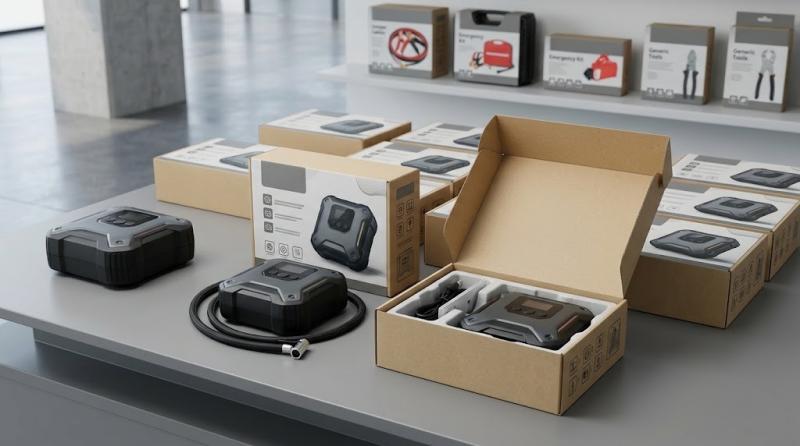
A product intended for B2B automotive distribution should meet three basic requirements.
1. It should match the target vehicle application.
The product's pressure capability, inflation performance and power source should correspond to the intended vehicle and tire category.
2. It should be practical for the end user.
Features such as compact storage, clear pressure display, auto shut-off, suitable hose length and an integrated work light can improve usability.
3. It should be commercially suitable for the buyer.
MOQ, packaging, OEM options, lead time, quality control and after-sales support all affect whether the product works for a distributor or private-label program.
This is why B2B buyers should evaluate the complete product program rather than selecting a portable tire inflator from one specification alone.
Start with the intended vehicle and tire type, then compare power source, inflation performance, pressure control, battery capacity, portability, hose length and durability. For B2B buyers, also evaluate OEM options, packaging, MOQ, lead time and quality control.
Neither configuration is suitable for every application. Rechargeable models provide greater freedom of movement, while 12V models can use vehicle power for longer operation. Dual-power designs can provide additional flexibility.
No. Maximum PSI indicates the highest pressure the inflator is designed to reach, but it does not by itself indicate inflation speed or overall performance. Buyers should also evaluate airflow, inflation time, duty cycle and the intended tire size.
Auto shut-off can make pressure management easier because the inflator can stop when the preset pressure is reached. It is particularly useful for consumer automotive accessories and roadside emergency products.
Buyers should test inflation performance, pressure measurement, battery endurance, operating temperature, valve connection, auto shut-off, charging, durability and packaging. Sample testing should be completed before mass production.
Many automotive inflators can be customized with brand logos, colors, packaging, accessories and selected product functions. The available options, MOQ and lead time should be confirmed with the manufacturer before production.
Look beyond the product price. Check the supplier's manufacturing capability, sample quality, specification consistency, quality-control process, OEM experience, packaging options, MOQ and production lead time.
Before selecting a portable tire inflator, B2B buyers can use this checklist:
The right portable tire inflator is not simply the model with the highest PSI or the largest battery.
For automotive distributors, wholesalers and private-label brands, the better approach is to match the product's power source, inflation performance, pressure control, portability, functions and durability with the intended vehicle application and sales channel.
Forcar develops automotive accessories for vehicle maintenance, roadside assistance and everyday driving applications, with OEM and private-label options for B2B customers.
If you are sourcing portable tire inflators for your automotive product range, contact Forcar to discuss product specifications, customization, packaging and bulk-order requirements.
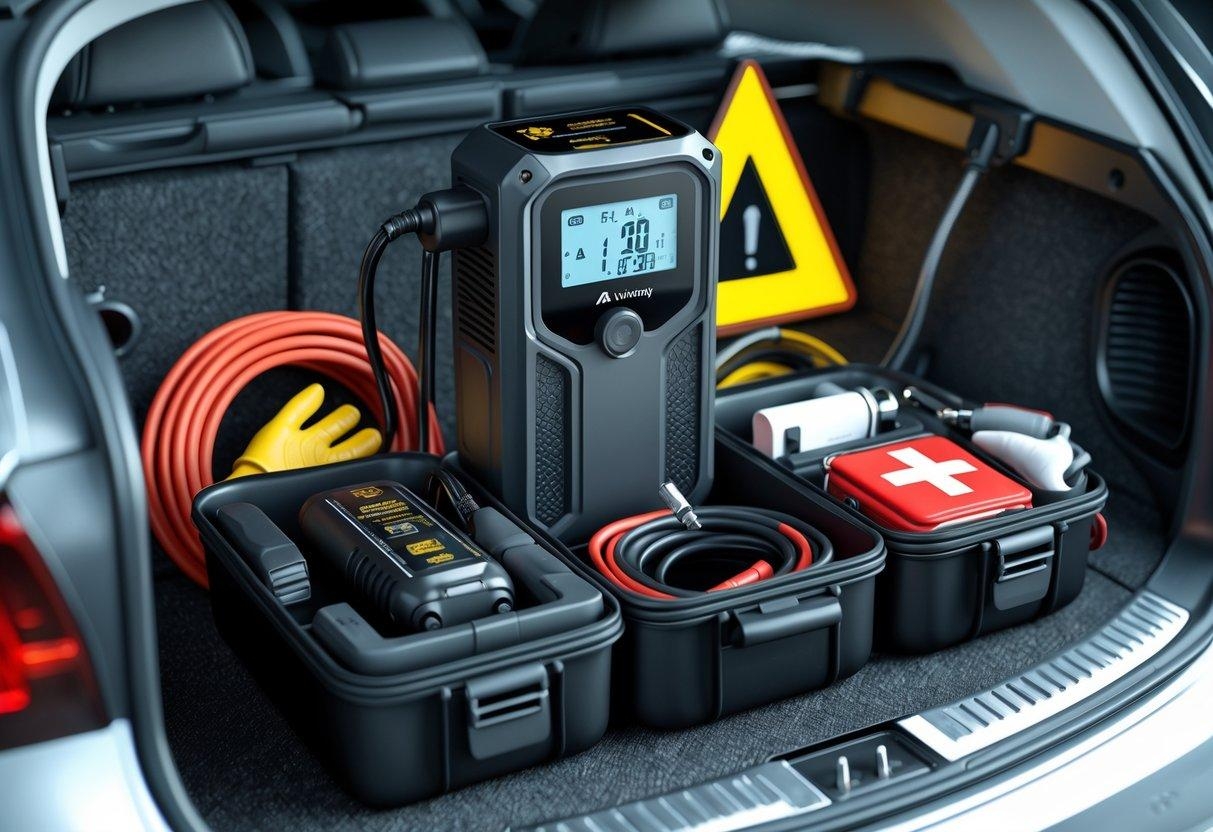
Discover what to include in a roadside emergency kit, from tire inflators and jump starters to work lights and safety hammers for essential car safety.
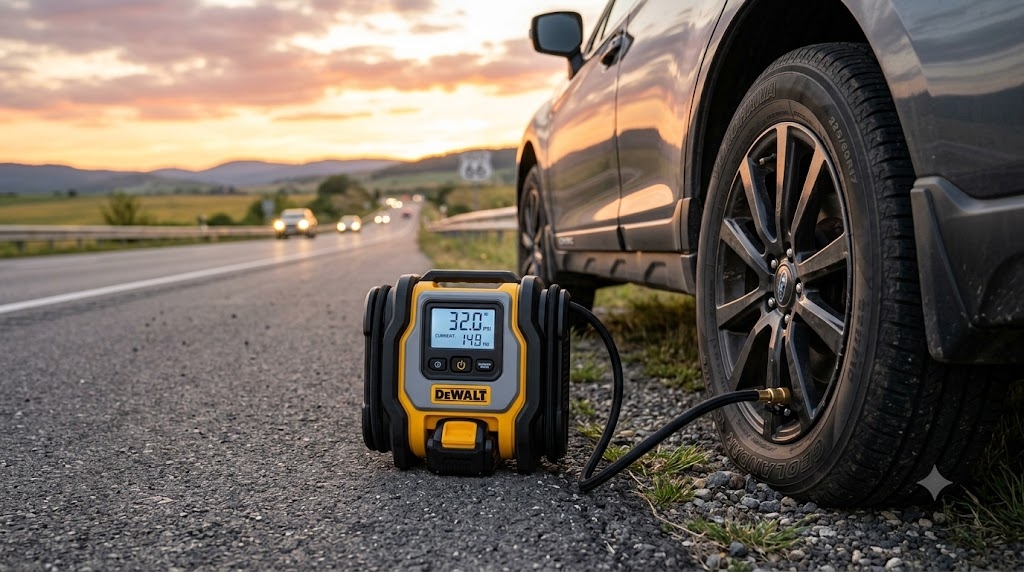
Learn how to identify a reliable portable air pump beyond inflated PSI claims. Discover what wholesalers should evaluate before sourcing portable tire inflators for retail or private label.
Compare digital tire inflators and traditional air pumps for cars. Learn about pressure control, portability, inflation speed, digital displays, and roadside convenience.
Learn how to choose the best tire inflator for your vehicle. Compare portable, cordless, and digital tire inflators, and discover the key features that matter for safety and convenience.